
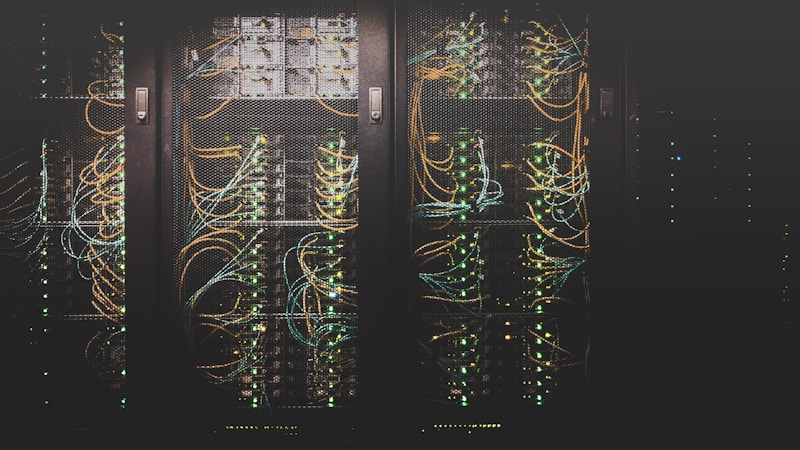
The numbers are staggering. Combined capital expenditure from the four largest cloud providers has nearly doubled in a single year, driven almost entirely by the insatiable demand for AI compute capacity. New data center campuses are being announced weekly, GPU clusters are being deployed at unprecedented scale, and power contracts are being signed years in advance.
Yet a fundamental constraint is emerging: the U.S. electrical grid was not designed for this pace of growth. Energy experts warn that grid headroom has been largely exhausted in key markets, and interconnection queues at major grid operators — ERCOT, PJM, and MISO — now exceed five times their historical averages.
The On-Site Power Pivot
In response, roughly 30% of all planned data center power capacity is now expected to come from on-site generation, up from virtually zero a year earlier. Companies are exploring everything from natural gas turbines and fuel cells to nuclear microreactors and, in Meta's case, space-based solar energy.
Meta recently announced partnerships to develop up to 1 GW of space solar energy and 1 GW/100 GWh of ultra-long-duration energy storage. Meanwhile, NVIDIA and Emerald AI are working with major energy companies including AES, Constellation, and NextEra to create a new class of "AI factories" that operate as flexible grid assets rather than passive power consumers.
What This Means for Infrastructure Operators
For mid-market data center operators, the implications are clear: power procurement strategy is no longer a back-office function — it is the single most important determinant of whether a facility can attract and retain AI workloads. Operators who secured long-term power purchase agreements before the current squeeze are well-positioned; those who did not may find themselves locked out of the AI infrastructure boom entirely.
The International Energy Agency projects global data center electricity consumption could approach 1,000 TWh by the end of the decade. Whether the grid — and the policy frameworks that govern it — can evolve fast enough to meet that demand remains an open question with enormous financial consequences.