
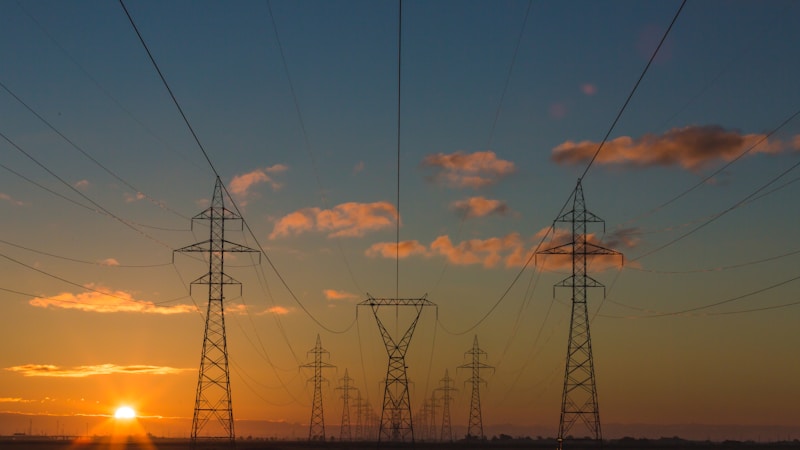
The numbers from PJM Interconnection, the grid operator serving 67 million Americans across 13 states and Washington D.C., mark the clearest quantification yet of how AI infrastructure demand is flowing into consumer electricity bills. PJM's latest capacity auction — procuring power for the year starting June 2028 — tied a $16.4 billion record, with data centers accounting for roughly $6.3 billion of the total.
The Capacity Price Signal
The price generators charge PJM for keeping power ready at moments of peak demand hit $325 per megawatt-day in the latest auction, a level that would have been unthinkable three years ago. The market monitor's analysis attributes the surge directly to large-load growth outpacing new generation — precisely the imbalance FERC's June show-cause orders are attempting to address.
The consumer impact is no longer theoretical. The $23 billion in data center-linked cost increases represents the accumulated effect of capacity auctions since 2024, and as Fortune notes, clawing those costs back is effectively impossible: they are embedded in multi-year capacity commitments that utilities have already passed through to ratepayers.
A Tale of Two Grids
Research from the Electric Power Research Institute adds important nuance: through 2024, data centers actually put downward pressure on average electricity prices in regions with excess generation capacity, by spreading fixed grid costs across more consumption. That dynamic has now inverted in constrained regions. The mid-Atlantic and parts of the Midwest — PJM territory — are where demand growth has exhausted surplus capacity, flipping data centers from rate-suppressors to rate-drivers.
This bifurcation is reshaping site selection. Regions with surplus generation — parts of the Southeast, the Pacific Northwest, and areas with stranded renewable capacity — can still absorb large loads without rate impacts, while PJM-territory projects increasingly face both higher power costs and political resistance driven by ratepayer backlash.
The Political Economy of Rate Increases
The $23 billion figure is becoming a political catalyst. It is cited in New York's Executive Order 62 rationale, in Pennsylvania legislative hearings on data center cost allocation, and in the growing number of state utility commission proceedings examining whether large loads pay their fair share. Parselion assesses that mandatory cost-allocation reform — requiring data centers to bear the full incremental cost of their grid impact — is now the most likely regulatory outcome across PJM states, with material implications for operating costs at existing and planned facilities.